Nobody put “emotionally support my enterprise software vendor shortlist” in their job description. And yet.
In the five years since remote work became the default rather than the exception, something has shifted in how enterprise buying decisions actually get made. The dashboards still show pipeline stages and intent signals. The CRM still tracks touchpoints. But underneath the data, there’s a more uncomfortable variable that most B2B marketers are either ignoring or actively running from: their buyers are lonely.
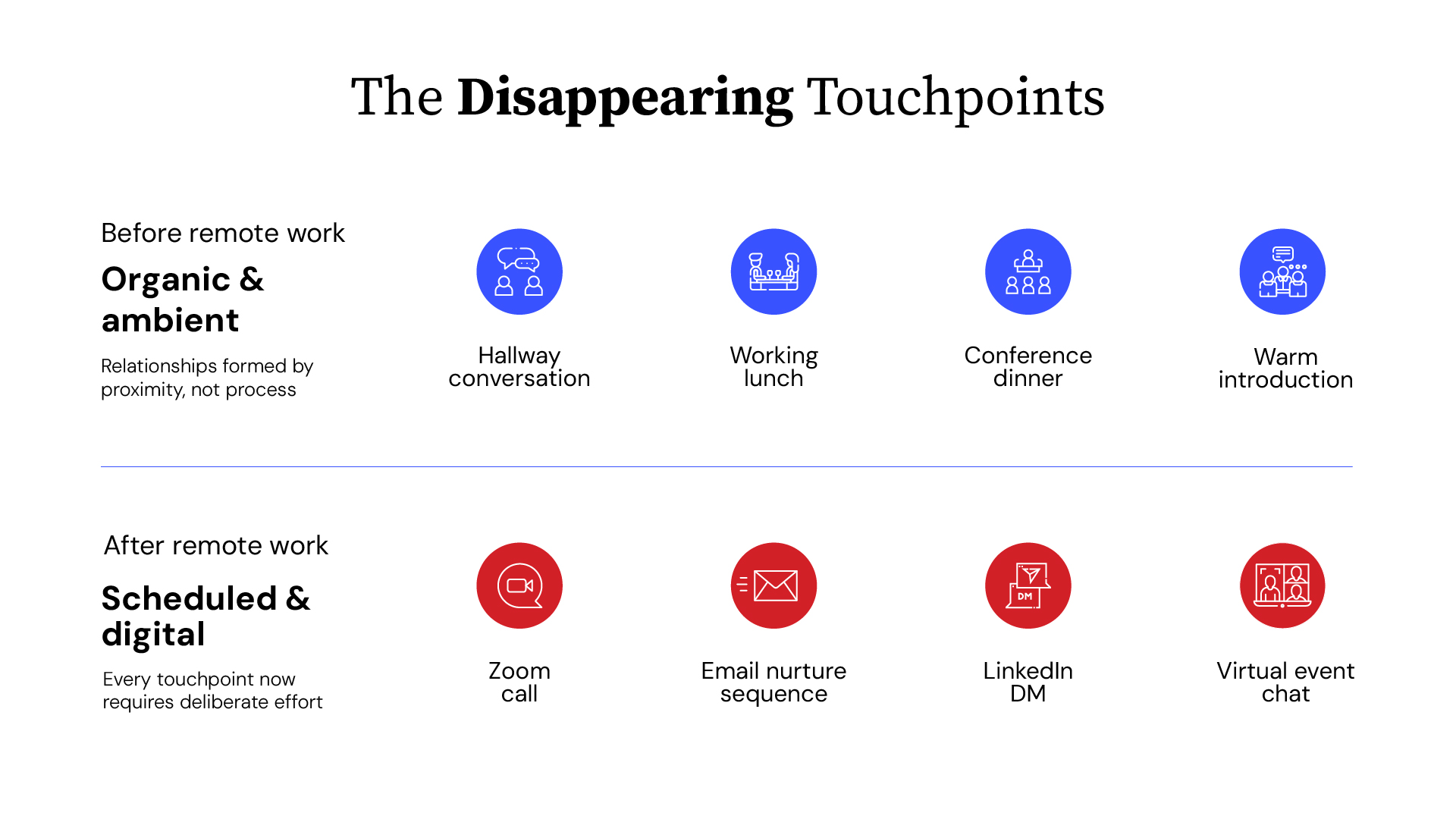
Not in a clinical sense. In the specifically professional sense of having lost the ambient social infrastructure that used to make complex decisions feel less frightening. The corridor conversations. The conference dinners. The “let me introduce you to someone” moments that used to happen naturally and now require a calendar invite.
Connection as a selection criterion
Across our embedded work with enterprise technology clients — built through deep buyer insight processes that go well beyond surface-level research — one pattern comes up with striking consistency. B2B buyer behavior in vendor selection goes far beyond functional evaluation. Buyers talk about:
- Whether they felt genuinely heard, not just processed through a sales motion
- Whether the vendor understood their specific context rather than mapping them to a generic use case
- Whether the relationship felt like a real partnership or a polished performance on quarterly review calls
B2B relationship marketing has always mattered at the top end. But the texture has changed. When everyone worked in the same building, relationships built themselves through proximity. Now they have to be deliberately constructed through marketing — and most vendors haven’t updated their approach.
The ones who have been winning deals they shouldn’t, on paper, be winning.
Why more automation is the wrong answer
The industry’s response to digital-first buyer journeys has been almost universal: add more automation. More nurture sequences, more personalization tokens, more AI-generated outreach that addresses someone by first name, references their industry vertical, and still somehow feels like it was sent by nobody to everyone.
The paradox: the more automated B2B demand generation becomes, the more a genuinely human interaction stands out. When a buyer who has received forty-seven automated sequences in a quarter has a real conversation with someone who clearly read their annual report and has an actual perspective on their challenges — that lands like relief.
Vendors gaining ground in this environment treat human attention as a scarce resource worth deploying strategically through marketing, not something to be scaled away.
What buyers are actually signaling when they ghost
When a B2B buyer goes quiet after a strong demo, the instinct is to diagnose a product gap or a budget issue. Sometimes that’s right. But particularly in complex, multi-stakeholder deals across regulated sectors; the ghost is often simpler: a buyer who never felt confident enough in the relationship to navigate internal turbulence.
Enterprise purchases are never clean. There’s always a reorg, a competing priority, a new executive who wants to revisit the shortlist. In those moments, buyers lean into vendors they feel they know — the ones whose marketing built familiarity and vendor trust well before a proposal was on the table.
Building for a lonelier buyer landscape
The practical shift isn’t about abandoning technology or measurement in your B2B marketing strategy. It’s about what you use them in service of. Intent data tells you when a buyer is active. It doesn’t tell you whether they trust you enough to take your call.
Which means the sequencing needs to flip:
- Old model: prospect efficiently → build rapport at proposal stage → deepen relationship post-contract
- New model: marketing builds relationship infrastructure early → vendor earns consideration set entry → trust, not just feature fit, drives the final decision
Buyers who feel like someone in your organization genuinely knows them by the time they’re evaluating options don’t need to be closed. They’ve already decided.
That’s the loneliness economy working in your favor — if your marketing is doing the right work.